Larchmont Nature Mindfulness
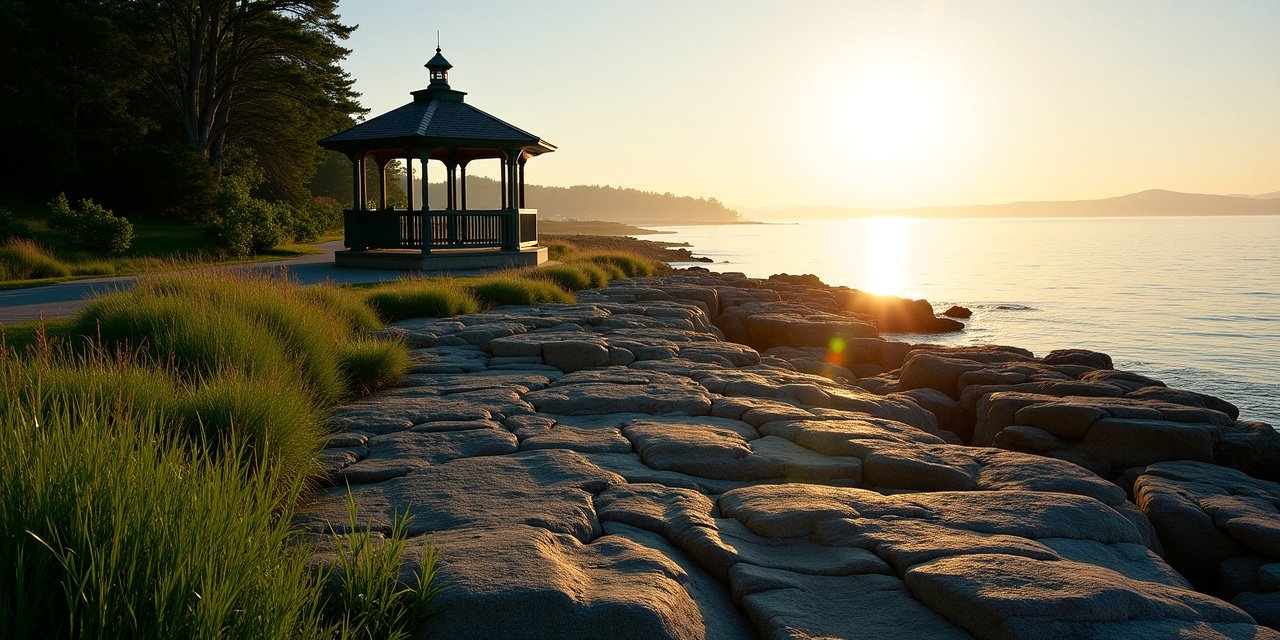
Larchmont packs more shoreline per acre than any enclave in the network. Manor Park holds 5,000 feet of Long Island Sound frontage inside just 13 acres. The whole village is walkable to it.
Nature Mindfulness Briefing — Larchmont
Primary Asset: Larchmont Manor Park. 13 acres, 5,000+ feet of shoreline, densest blue space in the network
Blue Space: Larchmont Harbor and Long Island Sound, dawn-to-dusk public access since 1892
Seasonal HRV Lift: Summer coastal exposure pushes HRV baseline to 35ms (enclave tracking data)
Pre-Train Window: 6:00–6:20am Manor Park walk before a typical New Haven Line departure is achievable
The Compact Coast Advantage: Why Density Beats Acreage
Blue space works on the nervous system. Green space alone does not match it.
White et al. (2019, n=20,000) found coastal environments produce stronger wellbeing gains than parks or forest. (observational data, not clinical)
Rye answers that mechanism with scale. The Marshlands Conservancy runs 147 acres of tidal interior.
Larchmont answers it with concentration. Manor Park is 13 acres, and nearly all of it touches water.
Five thousand feet of shoreline in a 13-acre footprint is a rare ratio. You are almost never more than a few steps from the water's edge.
That changes the session math. A full loop past the striated rocks and gazebos takes fifteen minutes, not an hour.
Larchmont itself is barely a square mile. The station, Chatsworth Avenue, and Manor Park sit within a fifteen-minute walk of each other.
Chappaqua offers forest. Scarsdale has Weinberg Nature Center. Neither is walkable from a train platform.
The vagal tone benefit of coastal exposure does not require a long session. Short, frequent contact with the shoreline appears to matter more than duration.
Larchmont's geography makes short and frequent the default. That is the actual advantage, not the acreage total.
Manor Park has been privately held by the Larchmont Manor Park Society since 1892. It has stayed open to the public every day since, dawn to dusk.
That governance model kept the park intact through a century of shoreline development pressure. Few Sound Shore villages can say the same.
Larchmont Nature Mindfulness Protocol
The protocol runs on two windows. The pre-departure walk uses Manor Park before the New Haven Line commute.
The midday reset uses Addison Park, a short walk off Chatsworth Avenue. Both serve distinct physiological composure goals.
The 6:00am start for the Manor Park walk is not rigid. A 20-minute session and the walk to the station both fit inside a 40-minute window.
That flexibility is the village's real edge. Rye's commuters need a car buffer. Larchmont's often don't.
| Location | Access Time | Session Type | Seasonal Note |
|---|---|---|---|
| Larchmont Manor Park | 6:00–6:20am | Pre-departure walk, shoreline loop | Open dawn to dusk year-round |
| Larchmont Harbor waterfront | Post-commute PM | Decompression walk, boat-traffic gaze | Busiest in-season, May–October |
| Addison Park (Chatsworth Ave) | Weekday midday | Micro-break, bench sit, breath anchor | Usable year-round, no car needed |
| Striated rocks, Manor Park shoreline | Weekend AM | Barefoot grounding, tactile attention | Low tide preferred, check tide chart |
The Manor Park walk needs no formal posture. Attention on the striated rock texture and the tide line is enough.
Gazebo stops work as fixed rest points. Pause at one, breathe for a minute, then continue.
Seasonal Nature Protocol
Manor Park's rule never changes with the season. It opens at dawn and closes at dusk, every day of the year.
What changes is how much daylight that gives you. The protocol adjusts to the clock, not to a seasonal closure.
Summer Protocol (May–October)
Long dusk hours stretch the post-commute window well past 8pm. Larchmont Harbor is busiest now, with yacht club sailing traffic filling the horizon.
That activity is not a distraction. Watching sail patterns without tracking any single boat is a workable form of open-monitoring practice.
Summer HRV baselines in Larchmont run around 35ms against a 32ms annual average. (enclave tracking data)
The rocks at Manor Park hold heat into early evening. A barefoot session there after 6pm still delivers a mild grounding effect.
Winter Protocol (November–April)
Larchmont Harbor does not freeze. The water stays visibly active through the coldest weeks.
Yacht club traffic disappears in winter, and so does most foot traffic. The park gets quiet in a way summer never allows.
The striated rocks ice over in freezing conditions. Treat them as a viewing point in winter, not a walking surface.
Waterproof footwear and a windproof layer matter more here than in the Marshlands interior. The harbor wind has no tree line to break it.
Shortened dusk cuts the pre-departure window's usable light, not its availability. A 6:00am walk in January still happens before sunrise, so a headlamp helps.
Winter HRV baselines drop to roughly 29ms. This is maintenance season, not a building season.
| Season | Primary Site | Session Format | HRV Baseline |
|---|---|---|---|
| Summer (May–Oct) | Manor Park shoreline | Barefoot grounding, sail-traffic gaze | ~35ms |
| Spring/Fall (Apr, Nov) | Larchmont Harbor waterfront | Walking meditation, tidal observation | ~32ms |
| Winter (Dec–Mar) | Manor Park (viewing only) | Cold-air walk, solitude practice | ~29ms |