Nature-Based Mindfulness in Westchester: Parks, Trails, and Outdoor Practices
Key Insight
Bottom Line: Westchester's 18,000 acres of parks are an underused wellness resource — and the scientific case for time in nature is stronger than most people realize.
2026 Data: Japanese Shinrin-yoku research shows measurable cortisol reduction from as little as 20 minutes in a forest environment; Westchester County Parks is now funding free monthly certified outdoor mindfulness sessions.
Local: No existing editorial guide covers nature mindfulness specifically for Westchester County — this is the first.
Westchester residents drive past 18,000 acres of county parkland on their commutes without thinking of it as a wellness resource. That's a significant oversight.
The research on nature and stress reduction has matured considerably. It's not about aesthetics or fresh air as a vague good. There are measurable, replicable physiological effects from time in forested environments — effects that translate directly to the burnout and chronic stress patterns common among Westchester professionals.
This guide covers what the science actually says, which local parks are best suited for mindfulness practice, and how to use them with intention rather than just as a place to walk your dog.
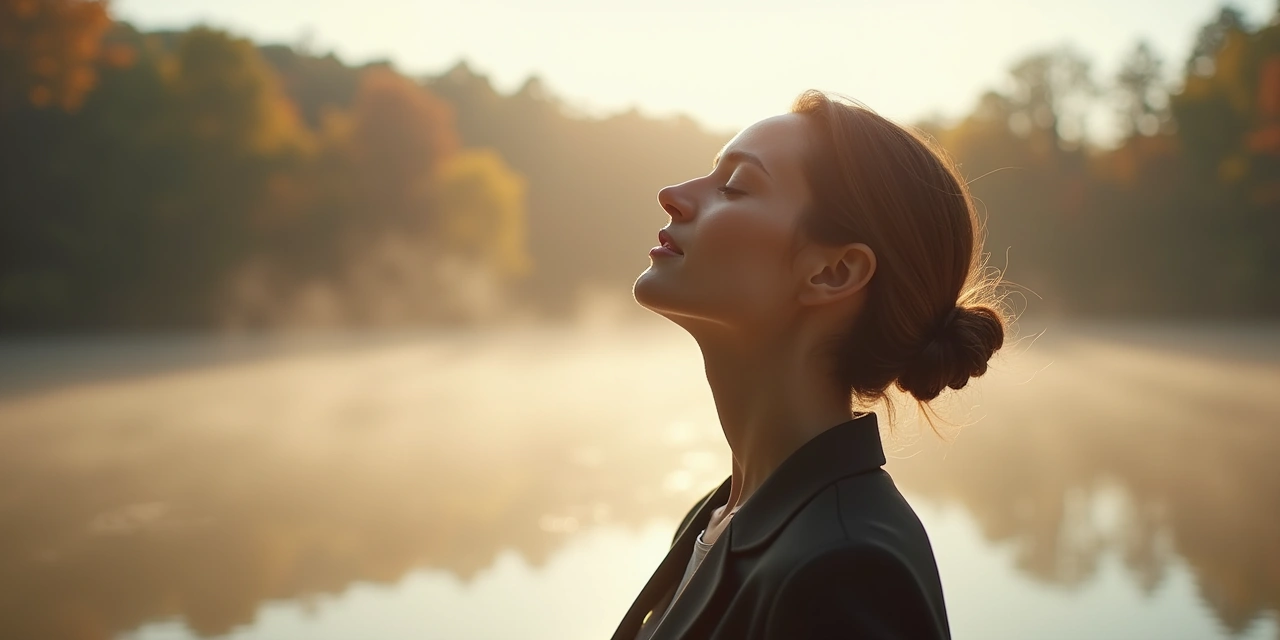
The Science of Nature and Stress Reduction
The term Shinrin-yoku — forest bathing — was coined by the Japanese government in 1982 as part of a public health initiative. The practice involves slow, sensory-attentive time in a forest environment, distinct from hiking or exercise.
A landmark 2010 study by Li Q, published in Environmental Health and Preventive Medicine, measured immune function markers in participants after forest bathing trips. Natural killer (NK) cell activity increased significantly and remained elevated for over 30 days after a three-day forest immersion.
The cortisol data is equally direct. Multiple studies, including USDA Forest Service-cited research, show salivary cortisol declining measurably after 20-minute exposures to forested environments — faster and at lower intensity than equivalent time in urban green spaces like city parks.
The mechanism involves multiple pathways: reduced visual complexity lowers cognitive load, phytoncides (airborne compounds released by trees) have demonstrated immune-stimulating effects, and natural soundscapes shift brainwave activity toward parasympathetic dominance. The effect is real and doesn't require belief in it to function.
Research Note
Li Q's 2010 research found that the NK cell activity increase from a three-day forest bathing trip lasted more than a month afterward — a durability that single-session urban wellness interventions rarely approach. For time-constrained professionals, the sustained return on a weekend in the woods is substantial.
Westchester County Parks Programs
Westchester County Parks is running a free monthly nature-based mindfulness series at Hilltop Hanover Farm in Yorktown Heights through June 2026. The sessions are led by Liz Slade, a certified mindfulness teacher. No registration is required.
Hilltop Hanover Farm is a county-owned working farm and environmental education center — an unusual combination of active agricultural land and natural surroundings that makes it distinct from a standard park trail experience.
The April, May, and June sessions are scheduled monthly. Exact dates are posted on the Westchester County Parks official calendar at parks.westchestergov.com. Dress for the season; sessions are weather-dependent.
This is one of the few government-funded certified outdoor mindfulness programs in the New York metro area. The county is funding something genuinely useful — use it. For the full picture of free county wellness programming, see our free wellness events calendar.
Best Parks and Trails for Mindful Walking
Rockefeller State Park Preserve in Pleasantville offers 1,400 acres of carriage roads, meadows, and wooded trails along the Hudson River watershed. The terrain is varied enough to sustain attention — which matters for mindfulness walking — without being technically demanding. It's the most aesthetically consistent park in the county for this practice.
Ward Pound Ridge Reservation in Cross River is the largest park in Westchester County at over 4,700 acres. The trail system is extensive enough that you can walk for an hour without retracing steps, and the interior feels genuinely remote despite being 45 minutes from White Plains. The Leatherman's Loop trail section is well-marked and suitable for slow, attentive walking.
Teatown Lake Reservation in Ossining surrounds a 14-acre lake with forested trails and field habitats. The lake circuit is particularly effective for mindfulness practice because the water provides a natural focal point — the reflection, the sound of wind on the surface, seasonal waterfowl — that keeps attention anchored without requiring effort.
Cranberry Lake Preserve in North White Plains is the closest significant nature reserve to the White Plains commercial center — a 190-acre county preserve with forested trails that feel genuinely quiet despite the surrounding development. For White Plains residents or anyone working near the city center, this is the most accessible starting point.
Research shows the highest HRV gains come from combining nature-based and instructor-led practice. The directory helps you find the indoor half.
Browse Directory →Westchester Parks: Mindfulness Suitability Guide
| Park | Location | Terrain | Mindfulness Suitability | Notes |
|---|---|---|---|---|
| Rockefeller State Park Preserve | Pleasantville | Carriage roads, meadows, woodland | Excellent | 1,400 acres; varied; Hudson views; state park pass or fee |
| Ward Pound Ridge Reservation | Cross River | Forested trails, stream valleys | Excellent | 4,700+ acres; genuinely remote feel; county park fee |
| Teatown Lake Reservation | Ossining | Lake circuit, wooded trails | Very good | Lake focus point aids attention; free entry |
| Cranberry Lake Preserve | North White Plains | Forested trails | Good | 190 acres; closest to White Plains; free; county-owned |
| Hilltop Hanover Farm | Yorktown Heights | Farm fields, natural areas | Very good | Free guided sessions Apr–Jun 2026; no registration |
Access fees and hours subject to change. Verify current conditions at parks.westchestergov.com and nysparks.com.
How to Practice Nature Mindfulness
The practice is simpler than it sounds, and simpler is better here. You don't need a teacher to start — you need a technique and a location.
Step 1: Arrive and pause. Before moving, stand still for two minutes. Let the sensory environment register.
You're signaling to your nervous system that the commute is over and the experience has changed.
Step 2: Walk at half your normal pace. This is the most important instruction. Speed is the enemy of sensory attention.
Slow enough that you notice the surface texture underfoot with each step.
Step 3: Anchor to one sense at a time. Spend five minutes on sound — cataloging everything you hear without judgment. Then five minutes on sight — specifically texture and light variation.
Then touch — temperature, air movement, bark if you stop at a tree. Moving through senses keeps attention active without straining it.
Step 4: When the mind wanders to tasks, return to the nearest sensory anchor. The same instruction as sitting meditation, applied to the body in motion.
Step 5: End with five minutes of stillness. Find a spot — a bench, a rock, a clearing — and sit or stand without moving. Let the accumulated sensory input settle.
This consolidation period is where much of the parasympathetic shift happens.
Seasonal Considerations
Spring — now — is the easiest entry point for nature mindfulness in Westchester. The sensory environment is maximally active: birdsong is at seasonal peak, new growth provides visual texture, and temperatures support comfortable slow movement without cold-weather layering complications.
Autumn color walks are the most compelling single-session practice in Westchester. Late October at Ward Pound Ridge or along the Bronx River Parkway corridor produces a sensory environment that requires almost no technique — the environment does the attentional work. Use that window deliberately.
Winter practice is genuinely viable at Cranberry Lake Preserve or Teatown, which maintain accessible trails through snow. The stripped-down winter forest — bare branches, muted palette, compressed soundscape — trains attentional precision more effectively than the sensory abundance of spring. It's advanced by accident.
Combining Nature Mindfulness with Other Practices
Journaling immediately after a nature session captures observations that fade quickly. Bring a small notebook or use a voice memo — the goal is to record one or two specific sensory observations before they normalize back into background noise.
Breathwork practiced outdoors differs from indoor breathwork. The CO₂ gradient in forested air is different from indoor air, and many practitioners report that box breathing or 4-7-8 breathing feels more effective outside. Try it at the stillness pause in step 5 above.
For structured outdoor guidance, the Westchester County Parks program at Hilltop Hanover Farm provides a teacher-led entry point. For deeper indoor practice that complements outdoor work, see our meditation classes guide.
Last updated April 2026. Information current as of publication. Not medical advice.
Consult a qualified practitioner before beginning any wellness program.
Sources
- Li Q. "Effect of forest bathing trips on human immune function." Environmental Health and Preventive Medicine, 2010. doi:10.1007/s12199-010-0105-9
- Westchester County Parks. Official programming calendar and park information. parks.westchestergov.com, April 2026.
- USDA Forest Service. "Urban nature for human health and well-being." FS-1096. U.S. Department of Agriculture, 2018.
- New York State Parks. Rockefeller State Park Preserve. nysparks.com. Accessed April 2026.
Frequently Asked Questions
Nature-based mindfulness combines deliberate attentional practices — breath awareness, sensory focus, slow movement — with time in natural environments. Research supports it strongly. A 2010 study by Li Q found that forest bathing significantly reduced salivary cortisol and boosted immune function.
The USDA Forest Service has cited multiple studies linking 20-minute nature exposures to measurable reductions in stress hormones.
The best options are Rockefeller State Park Preserve in Pleasantville (carriage roads, meadows, Hudson views), Ward Pound Ridge Reservation in Cross River (the county's largest park at 4,700+ acres), and Teatown Lake Reservation in Ossining (quieter trails around a lake). All are county or state managed and free or low-cost to enter.
Hilltop Hanover Farm in Yorktown Heights is a Westchester County-owned working farm and environmental education center. In 2026, Westchester County Parks is running a free monthly nature-based mindfulness series at the farm in April, May, and June, led by certified teacher Liz Slade. No registration is required — one of the few government-funded outdoor mindfulness programs in the New York metro area.
The closest substantial nature reserve to White Plains is Cranberry Lake Preserve in North White Plains — a 190-acre county-owned forested preserve with free entry. Rockefeller State Park Preserve in Pleasantville is about 20 minutes by car and offers the most varied terrain for mindful walking in the county.
Regular sitting meditation uses the breath or a mantra as the attention anchor in a controlled indoor environment. Nature mindfulness uses the sensory richness of an outdoor setting — birdsong, light through leaves, wind on skin — as the anchor. Natural environments also activate the parasympathetic nervous system through multiple physiological channels simultaneously, producing effects that tend to be faster and require less prior training to access.
Editorial Integrity
WestChester Zen editorial content is research-based and independently produced. Park assessments reflect editorial evaluation, not paid placement. Sources cited include Li Q (2010) in Environmental Health and Preventive Medicine, Westchester County Parks official calendar, and the USDA Forest Service.
Full policy at disclosures.