Sound Bath 101: What It Is, What to Expect, and Where to Find One in Westchester
Key Insight
Bottom Line: A sound bath is an immersive acoustic experience — not a water bath — that uses resonant instruments to shift your nervous system toward deep rest.
Research: A 2017 study in the Journal of Evidence-Based Integrative Medicine found statistically significant reductions in tension, anxiety, and physical pain after a single sound meditation session (Goldsby et al., 2017).
Local: Sound baths are available at Well Haus of Westchester (Pelham), Pure Presence Yoga (Jefferson Valley), and Repose (Pleasantville) — yet no local editorial resource explains what they actually are.
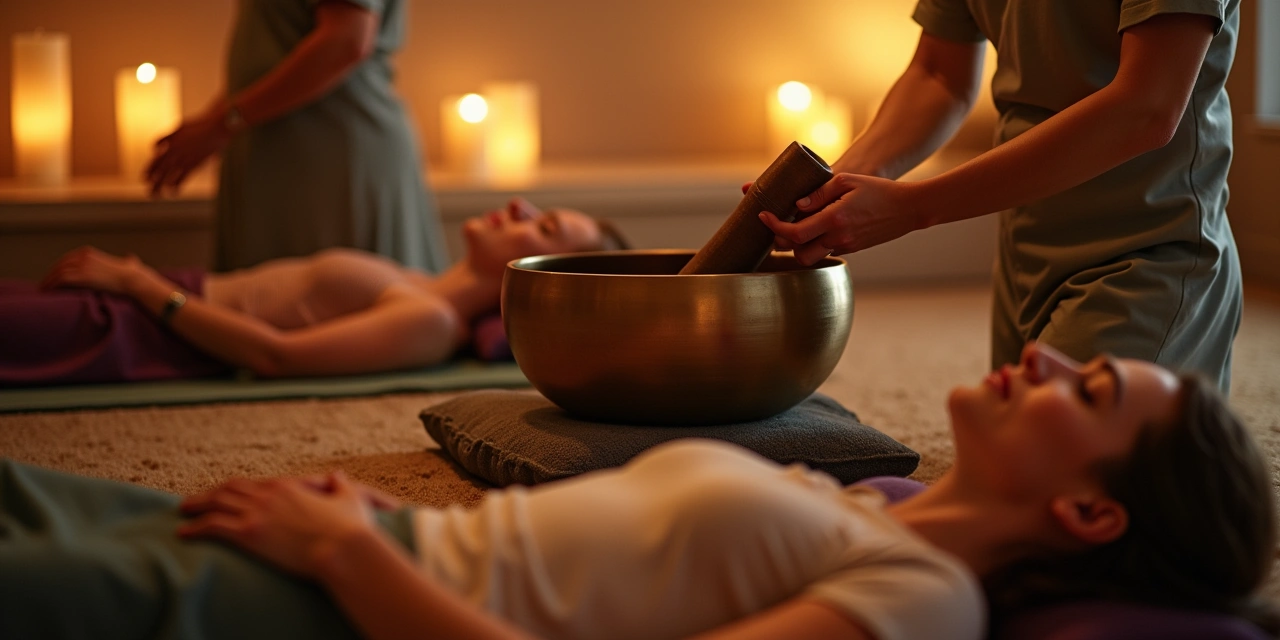
The name creates confusion. A sound bath has no water, no literal bathing. You lie on a mat, fully clothed, while a practitioner surrounds you with acoustic vibration from instruments that have been used for this purpose for centuries.
It's one of the fastest-growing wellness modalities in the Northeast — and one of the least understood. This guide covers the mechanics, the science, what actually happens at a session, and where to find one in Westchester.
What a Sound Bath Actually Is
A sound bath is an immersive acoustic experience in which participants lie still while a practitioner plays resonant instruments designed to produce sustained, layered vibration. The term "bath" refers to being bathed in sound — surrounded by it, not performing it.
Sessions typically last 45 to 75 minutes. You remain fully clothed, lying on a yoga mat with a blanket and eye covering. There is no instruction, no movement, no effort required.
The practice draws from Tibetan, Himalayan, and Indian traditions where singing bowls and gongs have been used in ritual and healing contexts for thousands of years. Modern Western studios have adapted the format for stress relief, nervous system regulation, and deep rest.
The Instruments: What Each One Does
Tibetan singing bowls are hammered metal bowls — typically brass alloys — that produce rich, multi-layered tones when struck or rimmed with a mallet. Their overtones are complex and dense, creating a sound that vibrates in the chest and skull simultaneously.
Crystal singing bowls are made from quartz and produce a cleaner, more sustained pitch than metal bowls. They're tuned to specific frequencies and are louder, with a tone that can feel like it originates inside the head.
Gongs are the most powerful instrument in a sound bath. A large gong played near full volume produces vibration you feel physically in your sternum and abdomen. Skilled practitioners use gongs to create wave-like cycles of tension and release across the session.
Koshi chimes and tingsha bells are used as transitional instruments — to open and close the session, or to punctuate shifts between bowl sequences. Their high, clear tones serve as auditory anchors.
What Happens in Your Body
The primary mechanism is acoustic vibration acting on the nervous system through two pathways: direct physical resonance (the body absorbs low-frequency vibration) and neural entrainment (the brain synchronizes its electrical activity to rhythmic acoustic input).
Brainwave entrainment is well-documented in neuroscience. When exposed to rhythmic sound at specific frequencies, the brain tends to shift its dominant electrical pattern — from beta waves (alert, analytical) toward alpha waves (relaxed, creative) and sometimes theta waves (the hypnagogic state between waking and sleep).
Theta state is associated with reduced cortisol, increased creativity, memory consolidation, and the dissolution of the ruminative thought patterns that characterize high-stress states. Many sound bath participants report entering this state within 20 to 30 minutes of a session.
The parasympathetic nervous system is also activated through the relaxation response. Heart rate slows, respiration deepens, and muscle tension reduces — the same physiological trajectory as deep meditation, but achieved through an external acoustic stimulus rather than internal effort.
What the Science Shows
The 2017 Goldsby study — the most-cited research on sound baths — enrolled 62 adults in a sound meditation session using singing bowls, crystal bowls, gongs, and chimes. Participants reported significant reductions in tension, anxiety, and physical pain, with the largest effect sizes in those with no prior experience.
Binaural beats research offers a parallel body of evidence. When two slightly different frequencies are played in each ear, the brain perceives a third "beat" frequency equal to the difference — and tends to entrain to it. Studies have shown binaural beats in the theta range (4–8 Hz) produce measurable increases in relaxation and reductions in anxiety (Wahbeh et al., 2007).
The honest caveat: sound bath studies use small samples without control groups. The findings are consistent and promising, but the field lacks the large randomized trials that would establish clinical-grade evidence. Sound baths are not a medical intervention — they're a potent wellness tool with a real physiological mechanism.
The directory lists every studio offering sound bath sessions in Westchester County, with practitioner backgrounds and session formats.
Browse Directory →What to Expect at Your First Session
Before you arrive: Wear comfortable, loose clothing — you'll be lying still for up to an hour and temperature regulation matters. Bring or borrow a yoga mat, a blanket, and an eye pillow or covering. Many studios provide these.
The setup: Mats are arranged in a circle or rows around the practitioner's instruments. You'll be invited to lie down, get comfortable, and close your eyes. The practitioner may offer a brief intention or short breathwork at the start.
During the session: The first 10 to 15 minutes can feel strange. Your mind will wander; you may notice self-consciousness about the sounds or your own stillness. This is normal.
Most people drop into deeper relaxation between 20 and 40 minutes in.
Common reactions: Tingling sensations, particularly in the hands and feet. Spontaneous emotional release — tears are not unusual and carry no specific meaning. Vivid hypnagogic imagery (dream-like visuals with eyes closed).
Some people fall asleep briefly, which is considered beneficial, not a failure.
After: Plan for 10 to 15 minutes of integration time. Avoid scheduling a demanding meeting or stressful drive immediately after. Drink water.
The relaxed state can persist for several hours.
Where to Find Sound Baths in Westchester
Well Haus of Westchester (Pelham) treats sound baths as a core modality rather than an occasional add-on. Their sessions are offered regularly and frequently sell out — book at least a week ahead for weekend evenings.
Pure Presence Yoga (Jefferson Valley) hosts sound bath events on a rotating schedule, often pairing them with restorative yoga or yin yoga for a combined session. The Jefferson Valley location draws attendees from Yorktown, Somers, and Mahopac.
Repose / Studio by Repose (Pleasantville) combines sound baths with breathwork — typically a 20-minute pranayama or box breathing segment followed by a 45-minute sound bath. This pairing accelerates the shift into relaxed brainwave states and is well-suited to professionals who struggle to drop into stillness quickly. See also: somatic healing at Repose.
When evaluating any sound bath offering, ask about the practitioner's training and instrument quality. A practitioner trained through a recognized program (Sound Healing Academy, Globe Sound Healing Conference lineage, or equivalent) will produce a meaningfully different session than someone who purchased a bowl and watched YouTube tutorials.
Sound Bath vs. Meditation vs. Yoga for Stress Relief
Each modality works through different mechanisms and suits different people. The choice is not about which is superior — it's about which mechanism matches your current capacity and preference.
For someone who finds seated meditation difficult because of an overactive mind, a sound bath is often more accessible. For someone who needs physical movement as an entry point to relaxation, yoga may serve better. See the comparison below.
Sound Bath vs. Seated Meditation vs. Yoga for Relaxation
| Factor | Sound Bath | Seated Meditation | Yoga |
|---|---|---|---|
| Beginner Access | High — passive | Medium — requires effort | Medium — some barrier |
| Time Required | 60–90 min session | 10–20 min daily | 30–60 min session |
| Physical Activity | None | None | Low to High |
| Research Evidence | Emerging (small studies) | Strong (30+ years) | Strong (anxiety, pain) |
| Westchester Access | 3+ studios | Many classes, apps | Abundant (10+ studios) |
| Typical Cost | $30–$55/session | Free–$25/class | $25–$40/class |
Sources: Studio pricing surveys, Goldsby et al. (2017), Goyal et al. (2014) JAMA Internal Medicine on meditation, Cramer et al.
(2018) on yoga.
Red Flags and Who Should Avoid Sound Baths
Tinnitus and hearing sensitivity: Crystal bowls and large gongs are genuinely loud at close range. If you have tinnitus or hyperacusis, speak with your audiologist before attending. Sitting at the back of the room reduces volume exposure significantly.
Pregnancy: Most practitioners advise caution in the first trimester due to the unknown effects of sustained low-frequency vibration on fetal development. Inform your practitioner before the session — they can adjust instrument proximity and intensity.
Active psychosis or dissociative conditions: The hypnagogic, boundary-dissolving quality of deep sound bath states is not appropriate for people with active psychotic symptoms or severe dissociative disorders. Talk with your treating clinician first.
Seizure disorders: Rhythmic acoustic stimulation is not documented to trigger seizures, but there is insufficient research to rule it out. Consult your neurologist if you have a seizure history.
For most healthy adults — including those managing work stress, anxiety, and the chronic low-grade exhaustion of Westchester commuter life — sound baths carry minimal risk and meaningful potential benefit. Also consider pairing with other meditation practices or attending meditation classes in Westchester to build a more complete practice.
Last updated April 2026. Not medical advice. Consult a qualified practitioner before beginning any wellness program.
Sources
- Goldsby TL, Goldsby ME, McWalters M, Mills PJ. (2017). Effects of Singing Bowl Sound Meditation on Mood, Tension, and Well-being: An Observational Study. Journal of Evidence-Based Integrative Medicine, 22(3), 401–406.
- Wahbeh H, Calabrese C, Zwickey H. (2007). Binaural beat technology in humans: a pilot study to assess neuropsychologic, physiologic, and electroencephalographic effects. Journal of Alternative and Complementary Medicine, 13(1), 25–32.
- Well Haus of Westchester (wellhauswestchester.com); Pure Presence Yoga (purepresenceyoga.com); Repose Pleasantville (reposestudio.com). Studio offerings verified April 2026.
Frequently Asked Questions
You lie on a mat fully clothed while a practitioner plays instruments — typically Tibetan singing bowls, crystal bowls, gongs, and chimes — for 45 to 75 minutes. The acoustic vibrations wash over you while you rest with eyes closed, often shifting into a deeply relaxed or meditative state without any effort on your part.
A 2017 study by Goldsby et al. in the Journal of Evidence-Based Integrative Medicine found significant reductions in tension, anxiety, and physical pain after sound meditation sessions. The evidence base is growing but still limited to small studies — consistent findings exist, but large randomized controlled trials are lacking.
Three established options in Westchester: Well Haus of Westchester in Pelham offers sound baths as a core modality; Pure Presence Yoga in Jefferson Valley hosts regular sound bath events; and Repose in Pleasantville combines sound baths with breathwork sessions. Book ahead — weekend sessions fill quickly.
Yes — sound baths are arguably easier for beginners than seated meditation. You don't need to control your thoughts or maintain posture. The acoustic environment does much of the work, guiding your nervous system toward a relaxed state without requiring prior meditation experience.
Most practitioners recommend once or twice a month for general stress management. If you're using sound baths to support a specific condition — chronic anxiety, sleep issues, burnout — weekly sessions for 6 to 8 weeks can produce more sustained effects before dropping to a maintenance schedule.
Editorial Integrity
WestChester Zen editorial content is research-based and independently produced. No sponsored studio listings. Full policy at disclosures.