Muse Headband vs. Apollo Neuro: Brain-Sensing vs. Body-Calming
Executive Briefing
Bottom Line: Muse measures brain activity during a seated session. Apollo Neuro calms the body continuously. They don't compete for the same slot in the day.
2026 Metric: Muse-S sleep tracking: 88%–96% per-stage accuracy against lab polysomnography (Lanthier et al. 2025, n=56 enrolled, 47 analyzed).
Access: Apollo Neuro: WZ Executive Protocol.
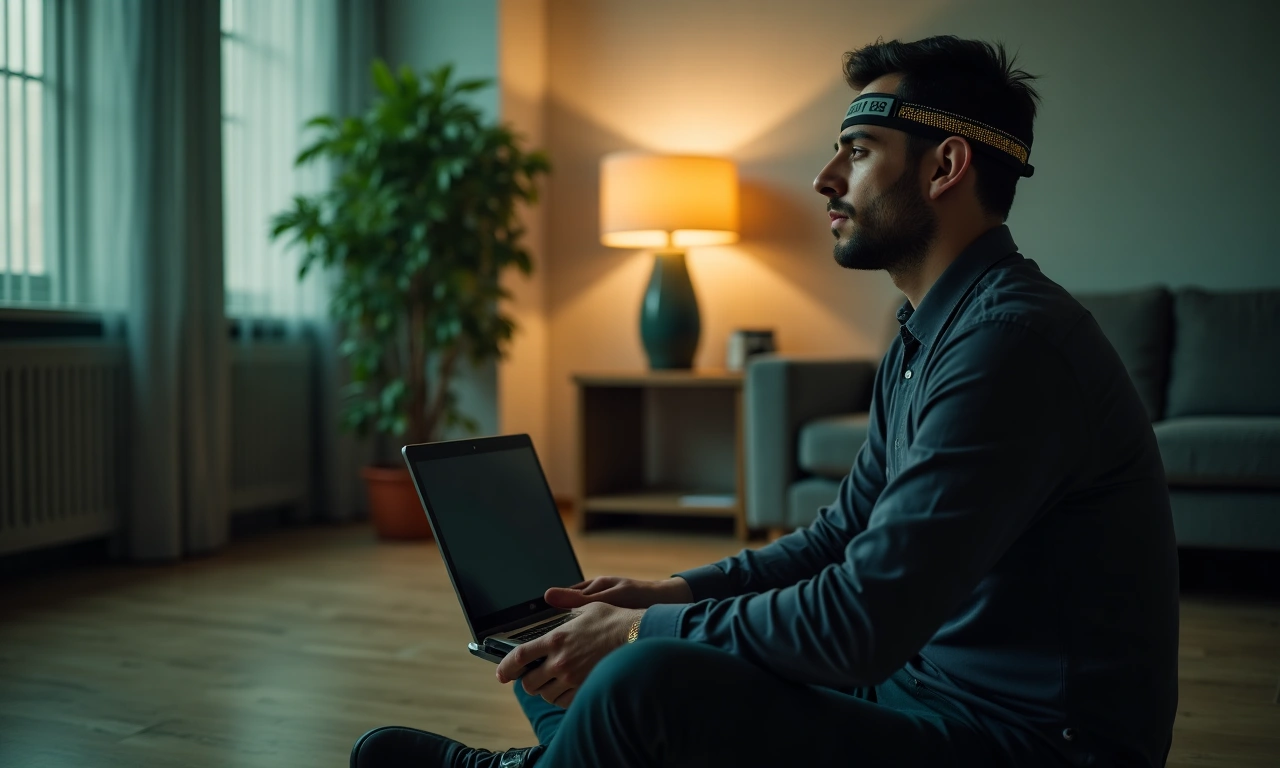
Muse is an EEG headband. It reads electrical activity at the forehead and scalp during a seated meditation session, then translates it into audio feedback — calm weather sounds when the signal reads settled, storm sounds when it doesn't.
Apollo Neuro reads nothing. It delivers vibration continuously, worn at the ankle, with no session to sit through.
What Muse's Published Research Actually Shows
The strongest recent figure comes from a 2025 sleep-tracking validation study (Lanthier et al., SLEEP Advances), testing the Muse-S headband against lab-grade polysomnography in 56 adults, with usable data from 47. Accuracy ranged from 88% to 96% across sleep stages, with a full-night Cohen's kappa of 0.76 — a measure of agreement with the gold-standard lab test.
Interaxon, Muse's maker, provided the hardware for that study but is stated not to have funded it, and was kept blinded to the polysomnography data during scoring.
A separate 2020 study examined whether Muse's real-time "calm" score during meditation actually tracks improvement in mindfulness. We could not independently access the full text to confirm its specific percentages, so we're not citing numbers from it here — but its own title, published in a peer-reviewed journal, frames the result as a caution rather than a validation. Readers evaluating Muse for meditation feedback specifically, not sleep tracking, should weigh that caution.
Muse Headband vs. Apollo Neuro
| Criterion | Muse Headband | Apollo Neuro |
|---|---|---|
| Signal type | EEG (brain electrical activity) | None — delivers vibration, doesn't sense |
| Use pattern | Seated session, forehead-worn | Continuous, ankle-worn |
| Meeting-compatible | No | Yes |
| Strongest published figure | 88–96% sleep-stage accuracy (2025, n=56/47) | efficacy claim not independently verified |
Muse-S accuracy: Lanthier et al., SLEEP Advances, 2025/2026, n=56 enrolled, 47 analyzed. Apollo Neuro anxiety-efficacy figures circulated elsewhere could not be independently verified against a published RCT.
Not the Same as Lief
Muse reads brain activity. Lief Therapeutics, covered in our separate Lief vs. Muse comparison, reads heart rate variability from a chest patch. Different sensor, different signal, different use case — don't conflate the two just because both appear in "calming wearable" searches.
Frequently Asked Questions
No. Muse is an EEG headband that reads brainwave activity during meditation. Lief is a chest-worn HRV biofeedback patch.
They measure different signals entirely; see our separate Lief vs. Muse comparison for that distinction.
A 2025 peer-reviewed sleep-accuracy study (Lanthier et al., SLEEP Advances) tested the Muse-S headband against lab-grade polysomnography in 56 adults, with good-quality data from 47.
Accuracy ranged from 88% to 96% across sleep stages, with a full-night Cohen's kappa of 0.76. Interaxon, Muse's maker, provided hardware for the study but is stated not to have funded it.
No. Muse is a visible forehead headband meant for seated meditation sessions, not continuous daytime wear. Apollo Neuro is worn at the ankle, concealed under clothing, for all-day use.
Editorial Integrity
Muse is not a Westchester Zen affiliate partner; this comparison is editorially independent. Apollo Neuro affiliate links are disclosed per FTC guidelines.
Full policy at disclosures.