The 5 Types of Meditation — Which Practice Is Actually Right for You?
Key Insight
Bottom Line: Each meditation type targets a different mechanism — picking the wrong one for your goals wastes weeks of practice time.
Research: Lutz et al. (2008) in Nature Reviews Neuroscience established that focused attention and open monitoring practices produce distinct, measurable neural signatures — they are not interchangeable.
Local: Multiple Westchester studios teach these styles separately, but no local comparison resource existed before this guide.
"Meditation" is one word that covers at least five distinct practices with different techniques, different neurological targets, and meaningfully different outcomes.
Choosing by feel or by whatever app is currently popular is a reasonable starting point. But if you have a specific goal — reducing anxiety, improving focus, recovering from emotional burnout — the type of meditation you pick matters.
This guide breaks down each of the five primary categories with enough precision to make an informed choice.
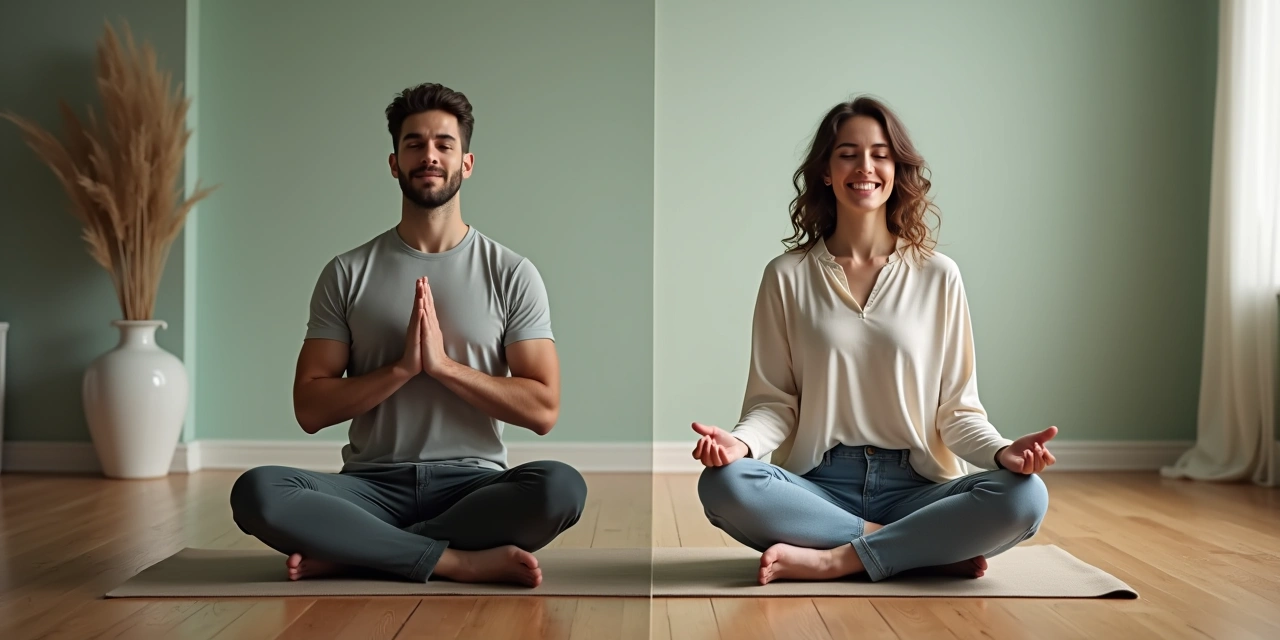
Why the Type of Meditation Matters
The popular assumption is that all meditation is basically the same — you sit quietly and feel better. The neuroscience tells a different story.
Lutz et al. (2008) in Nature Reviews Neuroscience demonstrated that Focused Attention Meditation and Open Monitoring Meditation produce distinct EEG patterns and activate different brain regions. They are not two names for the same thing.
Loving-Kindness Meditation activates reward processing circuitry in ways breath-based practices don't. Body Scan emphasizes interoception (body-based awareness) rather than cognitive monitoring. Mantra practice suppresses internal verbal processing through a different mechanism entirely.
Understanding these distinctions helps you practice with intention rather than hoping the generic version works out.
Type 1: Focused Attention Meditation
This is the most studied and most widely taught form. The instruction is simple: place your attention on a single object — typically the breath — and return it every time it wanders.
The object can be breath sensation, a candle flame, a single point on the wall, or the feeling of your feet on the floor. What matters is the repeated act of noticing distraction and redirecting — that act is the training stimulus.
Who it's for: Anyone starting out. Also specifically effective for people dealing with attention difficulties, task-switching fatigue, or the mental fragmentation that comes from a high-interruption work environment. White Plains and Scarsdale professionals report this as the most immediately applicable to daily work demands.
The evidence: Lazar et al. (2005) in NeuroReport found increased cortical thickness in attention and interoception regions in experienced practitioners. Focused Attention practice has the largest volume of controlled research of any meditation category.
How to do it: Sit comfortably. Bring attention to the physical sensation of breathing. When your mind wanders — and it will — return to the breath.
Start with 5–10 minutes and build from there.
Type 2: Open Monitoring Meditation
Where Focused Attention narrows attention to a single object, Open Monitoring expands it. The instruction is to observe whatever arises — thoughts, sounds, sensations, emotions — without attaching to any of it.
You're not directing attention; you're hosting it. Everything gets equal weight. Nothing is pursued, nothing is pushed away.
Who it's for: People with sufficient baseline focus who want to develop broader situational awareness, emotional equanimity, or the capacity to respond rather than react in high-stakes situations. This is more advanced — trying to start here without a foundation in Focused Attention practice typically produces glorified mind-wandering.
The evidence: Lutz et al. (2008) documented that Open Monitoring practitioners show sustained gamma-band EEG activity, associated with heightened perceptual awareness and cognitive flexibility. The effect is strongest in long-term practitioners.
How to do it: After establishing a few minutes of breath focus, release the specific breath anchor. Allow awareness to settle into a wide, receptive mode — notice whatever is most prominent in experience right now, without following any thought or sensation for more than a moment.
Type 3: Loving-Kindness Meditation (Metta)
Loving-Kindness Meditation is the most structurally different from the other types. Rather than observing experience, you're deliberately generating it — systematically cultivating feelings of goodwill toward yourself, then toward others in expanding circles.
The traditional sequence: start with yourself ("May I be happy, may I be well"), move to a person you care about, then a neutral person, then someone you find difficult, then all beings.
Who it's for: People dealing with interpersonal friction, social burnout, or the kind of pervasive irritability that comes from years of high-pressure professional environments. Particularly relevant for Westchester professionals in management roles where team dynamics have eroded.
The evidence: Klimecki et al. (2013) in Cerebral Cortex showed that Loving-Kindness training increased activation in the insula and anterior cingulate — brain regions associated with empathy and positive affect — and that these changes were measurable after just one day of training. A subsequent study showed protective effects against empathy fatigue in healthcare workers.
Workplace relevance: Loving-Kindness practice has been shown to increase prosocial behavior and reduce implicit bias in organizational settings — effects that extend well beyond the cushion.
Type 4: Mantra Meditation (Including TM)
Mantra-based practices use the silent or spoken repetition of a word or phrase to anchor attention and suppress the verbal mind's default chatter.
Transcendental Meditation (TM) is the most well-known commercial form, using a personalized Sanskrit mantra taught by a certified instructor. Non-commercial versions use words like "one," "peace," or "so hum."
Who it's for: People who find breath-focused practices frustrating or who have a lot of verbal mental activity. The mantra provides a more engaging anchor than the relatively subtle breath sensation.
The evidence: Travis & Shear (2010) in Consciousness and Cognition reviewed the distinct neural signature of TM — characterized by frontal alpha coherence — distinguishing it from both focused attention and open monitoring states. TM also has cardiovascular research behind it, including a 2012 AHA statement acknowledging evidence for blood pressure reduction.
Cost reality check: TM training currently costs approximately $1,500. The evidence does not show TM to be substantially more effective than less expensive mantra-based approaches. MBSR programs, which incorporate some mantra elements, cost $300–600 in the Westchester area and include structured instruction over 8 weeks.
Type 5: Body Scan and Movement-Based Practices
Body Scan meditation moves attention systematically through the body — from feet to head, or head to feet — noticing sensations in each region without trying to change them.
Yoga Nidra is an extended, guided version of this practice, often lasting 30–45 minutes and designed to induce a state between waking and sleep. It is practiced lying down and requires no physical exertion.
Who it's for: People with physical tension patterns, chronic stress held in the body, or sleep difficulties. Also effective for anyone who has trouble connecting with breath sensations but can feel gross physical sensations more easily.
Sleep research: One 30-minute Yoga Nidra session is associated with physiological restoration equivalent to several hours of sleep — relevant for Westchester commuters running chronic sleep deficits.
How to do it: Lie down or sit reclined. Bring attention to the soles of your feet. Notice any sensation — warmth, pressure, tingling, or nothing at all.
Move attention slowly up through the legs, pelvis, torso, arms, and head. The entire scan takes 10–30 minutes depending on pace.

The WestChester Zen Breathing Protocol combines the most evidence-backed techniques from focused attention and open monitoring traditions.
View the Protocol →5 Meditation Types: Side-by-Side Comparison
| Factor | Focused Attention | Open Monitoring | Loving-Kindness | Mantra (TM) | Body Scan / Yoga Nidra |
|---|---|---|---|---|---|
| Difficulty for beginners | Low | High | Moderate | Low–Moderate | Low |
| Minimum daily time | 5–10 min | 10–20 min | 10–15 min | 20 min (2×) | 10–30 min |
| Evidence strength | Very strong | Strong | Strong | Moderate–Strong | Moderate |
| Best for anxiety | Yes | With experience | Social anxiety | General stress | Physical tension |
| Best for focus | Primary use | Broad awareness | No | Moderate | No |
| Best for sleep | Moderate | No | No | Moderate | Primary use |
| Emotional resilience | Moderate | Strong | Primary use | Moderate | Moderate |
| Cost to start | Free | Free | Free | ~$1,500 (TM) | Free–$20/class |
| Instructor needed? | No | Recommended | No | Yes (TM) | No (audio guide) |
Sources: Lutz et al. (2008); Klimecki et al. (2013); Travis & Shear (2010); Carmody & Baer (2008).
Evidence ratings reflect volume and quality of controlled research.
How to Choose for Your Specific Situation
The matrix above gives you the data. Here's how to apply it.
If you've never meditated before: Start with Focused Attention. It has the clearest feedback loop, the strongest beginner evidence base, and the lowest barrier to entry. Ten minutes of breath-based practice, daily, for 4 weeks, before experimenting with anything else.
If focus is your primary goal: Stay with Focused Attention but extend the session length as you progress. Adding Open Monitoring as a second session (after the anchor session) compounds the benefit.
If anxiety or burnout is the driver: Commit to the full 8-week MBSR program, which combines Focused Attention, Body Scan, and Open Monitoring in a structured sequence with instructor support. See our full breakdown at MBSR Explained for Professionals.
If the problem is interpersonal: Add Loving-Kindness practice. Even 5 minutes of Metta at the end of a Focused Attention session produces measurable shifts in how you relate to people you find difficult.
If sleep is the issue: Body Scan or Yoga Nidra practiced in the evening. Don't use these as your only practice — they don't build the attentional foundation that daytime focused attention does.
For a plain-English introduction to what mindfulness is before choosing a style, start at What Is Mindfulness. For building the daily habit once you've chosen a style, read How to Build a Daily Meditation Habit. For the breathwork comparison, see Breathwork vs.
Meditation.
Last updated April 2026. Not medical advice. Consult a qualified practitioner before beginning any wellness program.
Sources
- Lazar, S.W., Kerr, C.E., Wasserman, R.H., Gray, J.R., Greve, D.N., Treadway, M.T., & Fischl, B. (2005). Meditation experience is associated with increased cortical thickness. NeuroReport, 16(17), 1893–1897.
- Klimecki, O.M., Leiberg, S., Ricard, M., & Singer, T. (2013). Differential pattern of functional brain plasticity after compassion and empathy training. Social Cognitive and Affective Neuroscience, 9(6), 873–879.
- Lutz, A., Slagter, H.A., Dunne, J.D., & Davidson, R.J. (2008). Attention regulation and monitoring in meditation. Trends in Cognitive Sciences, 12(4), 163–169. (Drawing on Nature Reviews Neuroscience classification framework.)
- Travis, F., & Shear, J. (2010). Focused attention, open monitoring and automatic self-transcending: Categories to organize meditations from Vedic, Buddhist and Chinese traditions. Consciousness and Cognition, 19(4), 1110–1118.
- Carmody, J., & Baer, R.A. (2008). Relationships between mindfulness practice and levels of mindfulness, medical and psychological symptoms and well-being in a mindfulness-based stress reduction program. Journal of Behavioral Medicine, 31(1), 23–33.
Frequently Asked Questions
The five primary categories are: Focused Attention meditation (breath-based concentration), Open Monitoring meditation (open awareness of all mental events), Loving-Kindness Meditation (deliberate cultivation of goodwill), Mantra Meditation (including Transcendental Meditation), and Body Scan or movement-based practices such as Yoga Nidra. Most clinical programs and studio classes draw from one or more of these categories.
MBSR body scan and breath-based focused attention have the strongest clinical evidence for anxiety reduction. The 8-week MBSR program, which combines body scan with focused attention and gentle movement, has an effect size of d=0.48 for stress reduction — comparable to pharmaceutical interventions for mild to moderate anxiety. For social anxiety specifically, Loving-Kindness Meditation adds meaningful benefit.
TM has genuine research support, particularly for cardiovascular outcomes and stress reduction. However, the current cost is approximately $1,500 for the initial training. The evidence does not show TM to be meaningfully superior to other mantra-based or focused attention practices, which are available at a fraction of the cost through MBSR programs and apps.
If cost is not a constraint and you prefer a fully structured instruction system, TM is legitimate — but it is not the only effective option.
Focused Attention meditation — specifically breath-based practice — is the most accessible entry point. It requires no equipment, no instruction beyond basic guidance, and produces clear feedback (you either notice your breath or you notice you've wandered) that helps beginners understand whether they're practicing correctly. Start with 5–10 minutes daily.
10 minutes per day is the evidence-supported minimum effective dose for beginners. Studies by Carmody and Baer (2008) showed a clear dose-response relationship — more time produces stronger effects — but 10 minutes consistently is substantially more effective than 30 minutes sporadically. Build the daily habit first, then extend duration once consistency is established.
Editorial Integrity
WestChester Zen editorial content is research-based and independently produced. Sources cited include peer-reviewed research and established wellness institutions. Full policy at disclosures.