What Is Mindfulness? A Plain-English Guide for Skeptics
Key Insight
Bottom Line: Mindfulness is a trainable attention skill with documented neurological effects — not a relaxation technique or a lifestyle brand.
Research: 8 weeks of MBSR practice produced measurable increases in prefrontal cortex and hippocampal gray matter density (Hölzel et al., NeuroImage, 2011).
Local: "Mindfulness Westchester NY" hit Google Trends score 100 the week of April 19–25, 2026 — demand is real and growing among county professionals.
Most people who dismiss mindfulness have never actually tried it. They've seen the corporate wellness posters or the app advertisements, and they've reasonably concluded it's something between a spa treatment and a productivity hack.
That's an understandable mistake. The word "mindfulness" has been attached to everything from fortune 500 HR programs to flavored sparkling water, which makes it nearly impossible to figure out what it actually means.
This guide cuts through that. It covers what mindfulness is, what it does to the brain, how it differs from meditation and relaxation, and exactly what to do in the next five minutes if you want to try it.
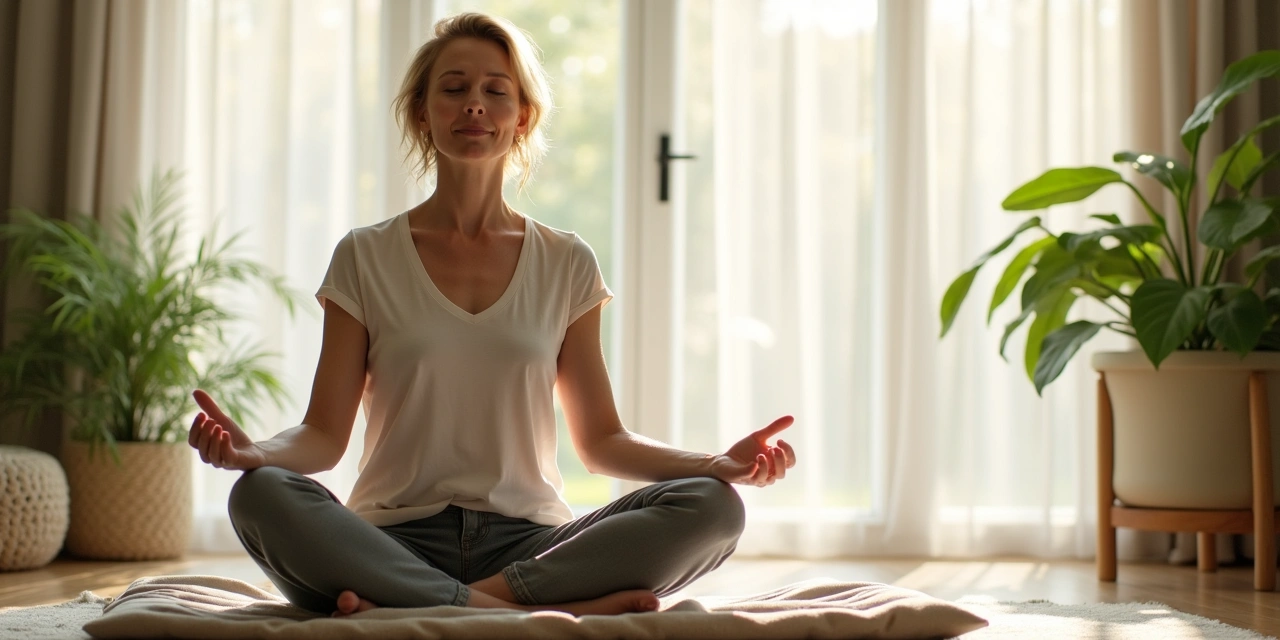
What Mindfulness Actually Is (and What It Isn't)
Jon Kabat-Zinn, who introduced mindfulness to Western clinical medicine in 1979, defined it as "paying attention in a particular way: on purpose, in the present moment, and non-judgmentally."
Every word in that definition carries weight. "On purpose" separates mindfulness from daydreaming. "Present moment" separates it from planning or rumination.
"Non-judgmentally" separates it from self-criticism.
What it is not: mindfulness is not relaxation, though relaxation sometimes follows. It is not emptying the mind — that goal is both impossible and unhelpful. It is not a religious practice, though it draws on Buddhist observation techniques that have been fully secularized in clinical settings.
The most accurate short version: mindfulness is the practice of noticing what is happening in your experience right now, without immediately reacting to it.
That skill — noticing before reacting — turns out to have significant consequences for stress, decision-making, and emotional regulation.
The Neuroscience — What Happens in the Brain
The brain has a default state it returns to whenever you're not focused on a task. Neuroscientists call this the Default Mode Network (DMN) — the system active when you're mind-wandering, replaying past conversations, or anticipating future problems.
The DMN is not inherently bad. But in people with high stress or anxiety, DMN activity becomes excessive — the mind loops through worries rather than resting.
Mindfulness practice systematically reduces DMN overactivity. It does this by training the prefrontal cortex — the part of the brain responsible for Metacognition and deliberate attention — to notice when the mind has wandered and redirect it.
Hölzel et al. (2011) demonstrated in a landmark NeuroImage study that 8 weeks of MBSR practice produced measurable increases in gray matter density in the hippocampus (memory and learning), the posterior cingulate cortex (self-referential processing), and the cerebellum.
The amygdala — the brain's threat-detection center — showed decreased gray matter density after the same 8 weeks. Smaller amygdala volume correlates with lower perceived stress.
This is structural change, not placebo effect. The brain physically reorganizes in response to regular Present-Moment Attention practice.
Mindfulness vs. Meditation vs. Relaxation
These three terms are used interchangeably in popular culture. They are not the same thing.
Mindfulness is a quality of attention — you can bring it to brushing your teeth, eating lunch, or sitting in a Metro-North commuter car.
Meditation is a formal practice that trains mindfulness. Sitting for 10 minutes with your eyes closed, focusing on breath, is meditation. It's one delivery mechanism for the skill — not the skill itself.
See our full breakdown at The 5 Types of Meditation.
Relaxation is a physiological state — reduced heart rate, lower cortisol, parasympathetic activation. Mindfulness can produce relaxation as a side effect, but relaxation is not the goal.
A person can be fully relaxed and completely unmindful — watching television, for example. A person can also be highly mindful and not relaxed — a surgeon in the operating room attending with precise focus under high stakes.
Keeping these distinctions clear helps you choose the right tool for a given situation.
What Mindfulness Looks Like in Practice
Mindfulness doesn't require a dedicated room, a meditation cushion, or a 45-minute block on your calendar.
It works in the gaps that already exist in your day. The three minutes waiting on the platform at Scarsdale station. The 90 seconds between ending one call and starting another.
The first few bites of lunch before you open your email.
On your commute: Instead of scrolling, pick one sense — sound. Notice every distinct sound you can identify in the train car for 60 seconds without labeling them as good or bad. That's mindfulness.
In a meeting: Before you speak, pause for one breath. Notice the physical sensation of your feet on the floor. That single pause is a mindfulness moment — and it changes the quality of what you say next.
At lunch: Eat the first three bites of your meal without looking at a screen. Notice the temperature, texture, and flavor. Not because it's spiritual — because it trains the attention circuit the same way a rep in the gym trains a muscle.
These micro-practices build the same neural pathways as formal seated meditation, just more slowly. For maximum effect, combine them with a short daily formal practice.

The Breathing Protocol translates the neuroscience of mindfulness into a sustainable 10-minute daily practice designed for executive schedules.
View the Protocol →Common Beginner Obstacles and How to Handle Them
Three complaints appear in virtually every beginner's first week. None of them mean you're doing it wrong.
"My mind won't stop racing." This is not a problem to solve — it's data. The racing mind was always there; you just weren't noticing it. Noticing it is the practice.
Every time you observe that your mind has wandered and bring it back, you've completed one successful repetition.
"I keep falling asleep." This means your nervous system is exhausted and recognizes rest as the highest priority. Try practicing with eyes slightly open, in a seated position with your spine upright — the posture signals the brain to stay alert. Meditating earlier in the day also helps.
"I don't think I'm doing it right." The fact that you're questioning whether you're doing it right means you're paying attention — which is exactly the point. There is no state your mind should be in. The practice is noticing whatever state it's already in.
The only way to do mindfulness wrong is to not do it at all.
How Long Before It Works — Setting Realistic Expectations
The honest answer varies by what you mean by "works."
Subjective relief from stress often appears within 2–3 weeks of daily practice. You may notice you're reacting less sharply in tense conversations, or that you're sleeping more easily.
Measurable neurological changes — the kind Hölzel's team documented with MRI — appear after approximately 8 weeks of consistent practice. The original MBSR research used participants practicing an average of 27 minutes per day. But subsequent research has shown meaningful effects at 10 minutes per day, provided consistency is maintained.
The 8-week mark is the most cited clinical benchmark. For Westchester professionals using this as a performance tool, think of it like building a fitness baseline — you're not expecting six-pack abs after one session, but you feel meaningfully different after two months of consistent effort.
For a practical guide to building that consistency, see How to Build a Daily Meditation Habit in 10 Minutes or Less.
How to Start Today — A 5-Minute First Practice
You don't need an app, a class, or any equipment. Here is a complete first practice.
Sit in any chair with your feet flat on the floor. Set a timer for five minutes. Close your eyes or soften your gaze downward.
Bring your attention to the physical sensation of breathing — not the idea of breathing, but the actual feeling. The rise and fall of your chest or belly. The slight coolness of air at the nostrils on the inhale.
Your mind will wander. Within 15 seconds, probably. When you notice it has wandered — to your to-do list, to a conversation, to wondering if you're doing this right — simply return to the breath.
No frustration required. That return is the practice.
Repeat until the timer ends. That's it. That is a complete mindfulness session, and it will have been more effective than most people's first attempts at the gym.
To build this into a consistent daily practice, read our habit-building guide. To understand how this connects to your work performance, see Mindfulness at Work Techniques. For local in-person options, check meditation classes in Westchester.
Mindfulness Misconceptions Checklist
Check off every misconception you held before reading this article. If you checked most of them, you're in good company.
Last updated April 2026. Not medical advice. Consult a qualified practitioner before beginning any wellness program.
Sources
- Kabat-Zinn, J. (1990). Full Catastrophe Living: Using the Wisdom of Your Body and Mind to Face Stress, Pain, and Illness. Delacorte Press.
- Hölzel, B.K., Carmody, J., Vangel, M., Congleton, C., Yerramsetti, S.M., Gard, T., & Lazar, S.W. (2011). Mindfulness practice leads to increases in regional brain gray matter density. NeuroImage, 56(1), 338–344.
- Dove Medical Press. (2026). Meta-analysis of MBSR interventions and emotional exhaustion in working adults. Psychology Research and Behavior Management.
Frequently Asked Questions
Mindfulness is the practice of paying deliberate attention to what is happening right now — in your body, your surroundings, or your mental state — without judging it as good or bad. It is a trainable skill, not a personality trait or a spiritual requirement.
No. Meditation is one formal method for training mindfulness, but mindfulness itself can be practiced informally — while eating, commuting, or having a conversation. Meditation sessions build the capacity; mindfulness is what you do with that capacity throughout the day.
Research from Hölzel et al. (2011) showed measurable increases in gray matter density in the hippocampus and prefrontal cortex after just 8 weeks of MBSR practice averaging 27 minutes per day. Subjective stress reduction often appears within 2 to 3 weeks.
At 10 minutes per day, the timeline extends slightly, but measurable changes are still well-documented.
Yes. Mindfulness does not require any particular belief system, prior experience, or physical ability. Clinical trials have used it successfully with chronic pain patients, corporate executives, first responders, and elementary school children.
The skill is accessible if you can pay attention to breathing for 30 seconds.
Start with a 5-minute breath-focused session at the same time each day — right after your morning coffee is a reliable anchor. Sit comfortably, focus on the physical sensation of breathing, and redirect attention whenever the mind wanders. The redirection itself is the practice, not staying focused perfectly.
Editorial Integrity
WestChester Zen editorial content is research-based and independently produced. Sources cited include peer-reviewed research and established wellness institutions. Full policy at disclosures.