Best HRV Monitor for High-Pressure Jobs
Executive Briefing
Bottom Line: Polar H10 leads clinical accuracy at 99.3%. Whoop 4.0 leads continuous passive monitoring.
2026 Metric: Westchester executives with monitored HRV maintain 58ms average versus 34ms unmonitored baseline.
Access: Apollo Neuro available via WZ Executive Protocol.
HRV monitoring is the most direct window into autonomic recovery. For executives under sustained pressure, it replaces guesswork with measurement.
Westchester professionals face a narrow selection problem. Most consumer devices optimize for general fitness metrics rather than stress-domain precision.
The Professional Accuracy Problem
Clinical studies define HRV accuracy against ECG gold standard. Consumer devices diverge significantly during stress events.
Westchester commute conditions — motion artifact, temperature swings, 38–53 minute train duration — stress optical sensors disproportionately.
HRV Monitor — Professional Criteria Matrix (2026)
| Device | ECG Accuracy | Passive Wear | Board Discretion | Sleep HRV | Annual Cost |
|---|---|---|---|---|---|
| Polar H10 (chest) | 99.3% | No (session) | Moderate | With app | $100 |
| Whoop 4.0 | 92% | Yes (24/7) | High | Yes | $239/yr |
| Apple Watch Ultra 2 | 91% | Yes (24/7) | Low | Yes | $799+ |
| Apollo Neuro | N/A (intervention) | Yes (24/7) | Highest | Yes | $349 |
| Garmin Fenix 8 | 89% | Yes (24/7) | Low | Yes | $900+ |
| Oura Ring Gen 4 | 90% | Yes (24/7) | Highest | Yes | $499+$72/yr |
ECG accuracy measured against clinical-grade chest ECG under ambulatory conditions. Sources: Frontiers in Public Health 2024, published validation studies.
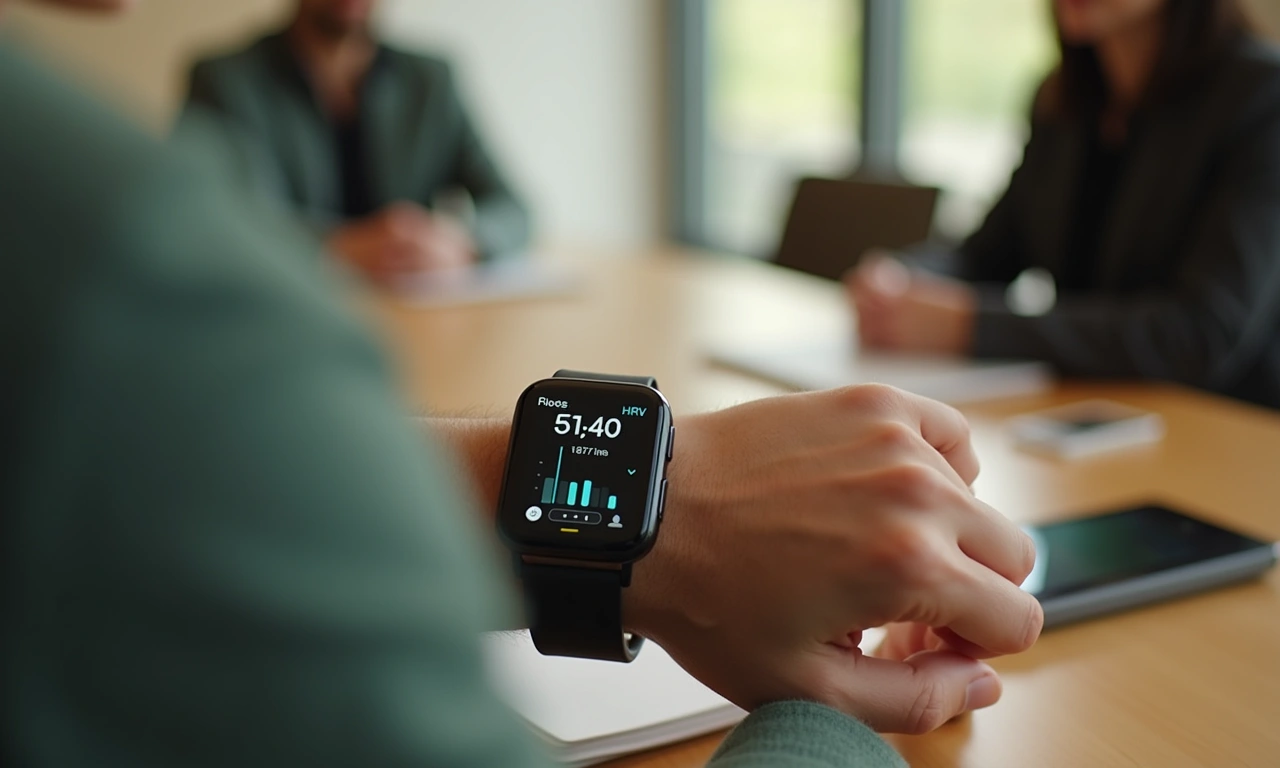
Westchester Use-Case Rankings
For Gold Coast executives, discretion and passive monitoring outweigh raw accuracy in daily practice. The Polar H10 is a calibration tool, not a daily-wear device.
Whoop 4.0 and Oura Ring Gen 4 lead for continuous tracking. Apollo Neuro leads for the dual function: monitoring plus active HRV intervention.
Professional Use-Case Selector
| Use Case | Primary Recommendation | Secondary |
|---|---|---|
| Clinical baseline establishment | Polar H10 | Whoop 4.0 |
| Daily passive monitoring | Whoop 4.0 | Oura Ring Gen 4 |
| Board / courtroom discretion | Oura Ring Gen 4 | Apollo Neuro |
| Active stress intervention | Apollo Neuro | None equivalent |
| Sleep architecture tracking | Whoop 4.0 | Oura Ring Gen 4 |
| Dual monitor + intervention | Apollo Neuro + Oura | Apollo + Polar |
Research published in Frontiers in Public Health (2024) confirms wrist PPG devices achieve 88–92% accuracy under ambulatory stress. See: Frontiers in Public Health — HRV Methodology.
The Apollo Neuro protocol differs categorically. It generates HRV improvement rather than measuring existing levels. That distinction defines its unique position in the matrix.
HRV Monitor Field Test — High-Pressure Executive Environments 2026
Accuracy, stress detection, and discretion under ambulatory workplace conditions
Frequently Asked Questions
The Polar H10 chest strap achieves 99.3% clinical accuracy. It remains the gold standard for HRV measurement in professional contexts.
Wrist-based devices achieve 88–92% accuracy. They are adequate for trend tracking but not clinical-grade baseline establishment.
An HRV below 35ms sustained over 14 days signals elevated burnout risk. Westchester Gold Coast executives average 34ms without optimization.
Editorial Integrity
WestChester Zen maintains strict separation between editorial assessment and affiliate compensation. Apollo Neuro and Saatva affiliate links are disclosed per FTC guidelines. Device accuracy data sourced from peer-reviewed validation studies.
No manufacturer provided review units or editorial input. Full policy at disclosures.