Your Wearable Just Stopped Watching and Started Coaching. Here's What Changed.
Executive Briefing
Bottom Line: Oura, WHOOP and Apollo Neuro all rebranded stress tracking as active training through 2025 and 2026, but only part of that pitch has real evidence behind it.
2025/26 Metric: A 2025 meta-analysis of 18 studies (n=1,352) found HRV biofeedback produces a medium effect on stress and depression. The strongest vibration-based vagus nerve research, by contrast, has tested ear placement, not the wrist or ankle used by consumer wearables.
Access: The Resilience Protocol.
Oura pushed a new stress model to every ring on the market in 2025. WHOOP expanded its live coaching prompts around the same time.
Apollo Neuro has run the same pitch for two years with a vibrating wristband. All three now use one word: training.
Training implies something a passive sensor cannot do. It implies the device changes you, not just reports on you.
That is a real claim. It deserves scrutiny.
What Actually Changed in 2026
Through 2024 and into 2025, Oura rolled out Resilience: a rolling readout of stress load against recovery capacity.
In 2025 the company redesigned it again as Cumulative Stress, borrowing explicit fitness language from strength training.
WHOOP's Stress Monitor, live since 2023, pairs a 0-3 daily score with guided breathing prompts triggered in real time during a spike.
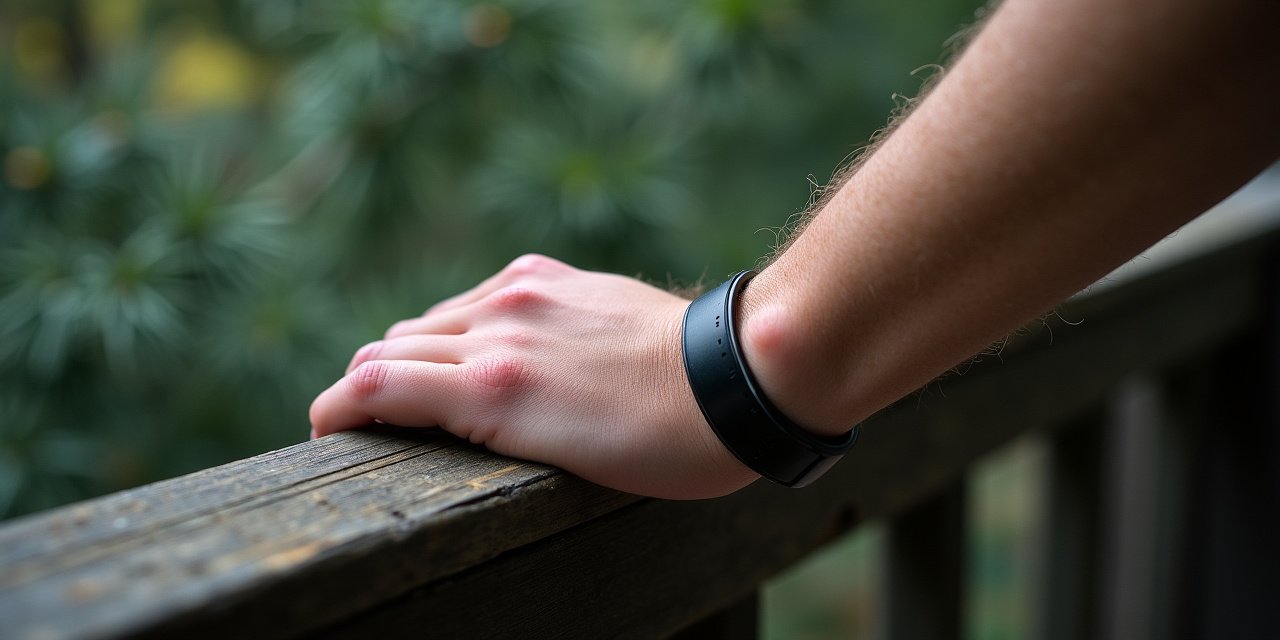
Apollo Neuro was already there. Its wrist and ankle band delivers vibration patterns meant to shift nervous system state on contact, no data required.
The phrase settling into the category is the "nervous system gym." Sets and reps, not just a daily number to glance at.
Rollout Timeline
Oura Resilience: early 2024. WHOOP Stress Monitor: March 2023, expanded coaching through 2025. Oura Cumulative Stress redesign: 2025. Apollo Neuro's vibration model has been unchanged in mechanism since 2020, only the marketing language has moved.
Oura's Shift From Score to Training Load
Oura's original stress score was one daily number. Useful, but static, and forgettable by lunch.
Resilience compared two weeks of strain against two weeks of recovery. It asked whether your nervous system was gaining ground or losing it.
Cumulative Stress goes further. It treats stress exposure like a training block, with volume that accumulates and requires deliberate recovery to offset.
The framing is deliberate. Oura wants Cumulative Stress read like weekly mileage, not a lab result.
WHOOP and Apollo Neuro Are Running the Same Playbook
WHOOP's Stress Monitor does not just display a number. It interrupts you mid-spike with a breathing prompt, then checks whether the prompt worked.
That is a genuine behavior loop: measure, intervene, remeasure. Apollo Neuro skips the measurement step and goes straight to intervention.
Its vibration engine runs all day, or in short sessions before a high-stakes meeting. The company frames it as Vagal Tone conditioning.
Calmigo and Lief occupy the same ground with different hardware: handheld breath pacing, chest-patch biofeedback. See our Calmigo vs. Apollo Neuro matrix and Lief vs. Muse comparison for device-level scoring.
Does Vibration Actually Train Your Vagus Nerve?
This is where the pitch gets shaky. Vagal Tone is a real, measurable physiological quantity. Vibration-based stimulation of it is not equally well established.
A 2025 pilot study published on PubMed tested vibrotactile stimulation of the vagus nerve directly, with results appearing in PLOS One.
The stimulation site was the outer ear, not the wrist or ankle. Researchers measured changes in limbic brain connectivity across five vibration frequencies.
That is real evidence of a mechanism. It is not evidence for where consumer wearables actually vibrate.
Information Gain
The peer-reviewed vibrotactile vagus nerve research and Apollo Neuro's marketing are describing two different anatomical targets: auricular stimulation in the lab, wrist and ankle placement on the shelf. That distinction does not appear in the general wearable coverage. It is the detail worth knowing before you buy the pitch.
Where the Clinical Evidence Actually Holds Up
Breath-paced HRV biofeedback is a different story, and a better-supported one.
A 2025 systematic review in Applied Psychophysiology and Biofeedback pooled 18 studies and 1,352 subjects on remote HRV biofeedback.
It found a medium effect size for depression and for HRV itself, with the strongest results tied to short daily sessions under 20 minutes.
An earlier PubMed-indexed trial found comparable gains when HRV biofeedback was added to a remote depression care program.
The caveat matters. Portable HRV biofeedback was not shown to outperform mindfulness meditation or plain exercise. It works. It is just not proven to beat free alternatives.
Marketing Reframe or Real Capability Shift?
Both, depending on which feature you are looking at.
The coaching layer, breathing prompts triggered by live stress data, is a genuine behavioral upgrade over a static daily score.
The vibration-only Vagal Tone pitch is thinner. It borrows credibility from vagus nerve research done somewhere else on the body entirely.
Oura and WHOOP's shift toward training language is mostly real: an actual new feedback loop, not just new copy on an old feature.
Apollo Neuro's shift is mostly copy. The hardware has not changed since 2020. The vocabulary caught up to the industry mood instead.
What to Actually Do If You Already Own One of These
If you own an Oura ring, use Cumulative Stress as a weekly planning signal, not a daily scoreboard. Check it Sunday night, not every hour.
If you own a WHOOP, take the breathing prompts seriously. That loop has the strongest evidence behind it in this entire category.
If you use Apollo Neuro for Vagal Tone conditioning, keep it if it helps you. Just do not expect ear-stimulation research to validate a wrist placement. It is a different intervention.
If you are shopping new, prioritize a real-time feedback loop over a device that only vibrates. See our HRV Wearable Stress Monitor audit for scoring criteria and the Apollo Neuro vs. WHOOP matrix for a device-level breakdown.
Passive Tracker or Active Trainer? A 3-Question Read
How to use this: Answer three questions about what you actually need. This is not a purchase recommendation engine. It points you to the right comparison matrix on this site for a full device-level decision, not a single verdict.
A structured 21-day sequence for building HRV and Vagal Tone through methods with actual evidence behind them, independent of which wearable you own.
View the Protocol →Last updated July 2026. Not medical advice. Consult a qualified practitioner before beginning any wellness program. Performance consultancy content. Independent lead-generation resource for third-party retailers.
Sources
- AOL News (2025). How Oura and WHOOP are shifting wearables from passive tracking to nervous system coaching. Read source.
- Applied Psychophysiology and Biofeedback, Springer Nature (2025). Efficacy and Methodology of Remote Heart Rate Variability Biofeedback Interventions for Mental Health: A Systematic Review and Meta-Analysis. Read study.
- PubMed / PLOS One (2025). Vibrotactile auricular vagus nerve stimulation alters limbic system connectivity in humans: a pilot study. Read on PubMed.
- PubMed (2020). Feasibility and Efficacy of the Addition of Heart Rate Variability Biofeedback to a Remote Digital Health Intervention for Depression. Read on PubMed.
- Katie Couric Media (2026). The best sleep trackers, reviewed. Read source.
Frequently Asked Questions
Usually not as a new purchase. Oura's Cumulative Stress and WHOOP's Stress Monitor coaching prompts are software updates pushed to hardware you likely already own. Check your app before buying new hardware. The upgrade may already be sitting on your wrist.
Minimal, with one caveat. These are consumer wellness devices, not FDA-cleared medical devices, so no clinical liability standard applies. The real exposure is data handling: biometric data collected through an employer wellness program can trigger state biometric privacy statute obligations. Route any employer-sponsored rollout through counsel before mandating use.
The evidence supports the behavioral loop, not any specific piece of hardware. Breath-paced HRV biofeedback shows a medium effect size on stress and depression across 18 pooled studies. That result held regardless of whether subjects used a low-cost app or a premium wearable. Pay for the feedback loop, not the vibration motor.
Treat them as unproven, not disproven. The strongest peer-reviewed vibrotactile vagus nerve research to date stimulated the outer ear, not the wrist or ankle. No published study has validated a wrist or ankle wearable's specific placement against a measured vagal outcome. That's a real evidence gap, not a dismissal of the entire category.
Editorial Integrity
WestChester Zen editorial content is research-based and independently produced. This article evaluates Oura, WHOOP and Apollo Neuro marketing claims against peer-reviewed research. Apollo Neuro is a disclosed affiliate partner elsewhere on this site. This analysis was not compensated by any manufacturer named here. Full policy at disclosures.