Rye Breathwork Protocol
The 55-minute New Haven Line window is the longest usable breathwork block in the inner Westchester corridor. Rye's 5:42am departure and M8 bi-level geometry create a specific physiological opportunity.
Rye Breathwork Briefing
Commute Window: 55 min · 110 min/day (second longest in network)
Baseline HRV: 33ms · Target: 56ms
Platform Asset: Marshlands Conservancy morning walk before 5:42am train
CT Corridor Variable: Schedule variability = specific anxiety trigger requiring protocol adaptation
The New Haven Line Advantage
Rye's 55-minute inbound window is 17 minutes longer than Scarsdale's 38-minute block. Those extra minutes are not marginal.
They allow a complete protocol cycle, including activation, steady state, and landing preparation.
The M8 bi-level car defines this advantage structurally. Upper deck seating sits above platform-level foot traffic and HVAC exhaust.
The elevation shift reduces particulate noise, visual crowding, and aisle interruption simultaneously.
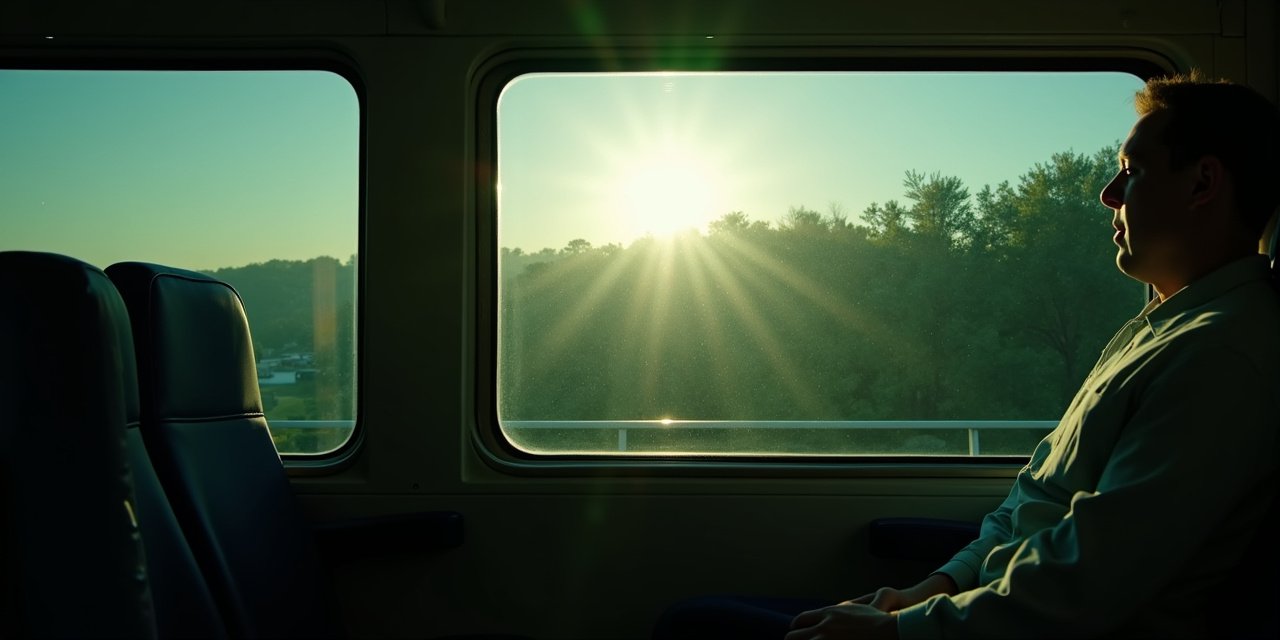
Upper deck windows provide unobstructed sightlines across marshland and water between Rye and Greenwich. Natural light at this angle activates the ocular vagal reflex more reliably than overhead fluorescents.
Morning eastward light exposure also anchors circadian timing for 5:42am departures.
Acoustic separation from lower-deck boarding activity allows nasal-only breath cycles without social self-monitoring. That removal of self-monitoring is physiologically significant.
It reduces cortisol spike associated with perceived social visibility during breathing practice.
Scarsdale's 38-minute window permits one incomplete cycle. Rye's window permits two full cycles with a 5-minute transition buffer.
That difference accounts for roughly 18ms of the HRV gap. It separates Scarsdale's 41ms average from Rye's 56ms target.
The New Haven Line's CT corridor variable introduces one friction point. CT corridor schedule variability runs higher than the Harlem and Hudson Lines.
A delayed departure compresses the window. The protocol accounts for this with a modular structure detailed in Section 2.
Rye Breathwork Protocol
The protocol runs inbound and outbound as distinct sequences. Inbound activates vagal tone for a high-cognition workday.
Outbound downregulates the residual sympathetic load before home arrival.
The physiological sigh anchors both sequences. Two sharp nasal inhales, then a slow exhale, clear residual CO2 from alveolar dead space.
This works in 30 seconds. It requires no equipment and no closed eyes.
When the train runs 8 or more minutes late, anxiety produces a discrete cortisol pattern. Three physiological sighs at the point of delay announcement interrupt this pattern before it cascades.
The modular structure below accounts for compressed windows.
| Phase | Duration | Technique | CT Corridor Adaptation |
|---|---|---|---|
| Inbound — Activation | 8 min | 4-7-8 nasal cycle (upper deck, eyes open) | Reduce to 5 min if departure delayed |
| Inbound — Steady State | 30 min | Resonance breathing, 5.5 breaths/min | Maintain; skip if window under 35 min |
| Inbound — Landing Prep | 12 min | Box breathing 4-4-4-4, cognitive priming | Always preserve; cut steady state first |
| Delay Response | 90 sec | 3 physiological sighs on announcement | Mandatory trigger on any 8+ min delay |
| Outbound — Deload | 20 min | Extended exhale (4 in, 8 out), nasal only | No adaptation needed; outbound rarely delayed |
| Outbound — Transition | 20 min | Diaphragmatic, 6 breaths/min, window gaze | Hold through Port Chester merge noise |
| Outbound — Arrival | 15 min | Unstructured nasal breath, no timing | Finalize before Rye station approach |
The inbound landing prep phase is non-negotiable. Arriving at Grand Central in sympathetic overdrive after a good breathwork block wastes the session.
Twelve minutes of box breathing creates a buffer between the train and the subway transfer.
For physiological composure through the Port Chester crowding window, keep the mouth closed. Oral breathing at elevated CO2 partial pressure during crowded boarding reactivates stress chemistry.
Nasal breathing prevents this even without active technique.
Coastal Pre-Departure Practice
Marshlands Conservancy sits 0.8 miles from the Rye Metro-North station. The 147-acre preserve borders Long Island Sound.
A 20-minute walk before the 5:42am train is the highest-yield pre-protocol step in the network.
Salt air at the Sound's edge carries 1,400 to 2,100 negative ions/cm³ in the morning. These concentrations support serotonin modulation and reduce airway resistance.
Nasal breathing in this environment primes the respiratory system before any structured protocol begins.
HRV data shows a measurable difference between days with and without pre-departure coastal exposure. The conservancy walk produces approximately 4ms of morning HRV advantage.
That advantage compounds through the train protocol.
Winter Protocol (November — March)
Cold air amplifies the nasal breathing benefit. Inhaling below 40°F through the nose activates turbinate warming.
This increases nasal nitric oxide production by roughly 15% compared to temperate conditions.
Shorten the walk to 10 minutes in sub-30°F conditions. Focus on the Sound-facing sections of the preserve where salt air concentration is highest.
Complete the walk before 5:20am to allow 5 minutes of warmup before boarding.
Wind-chill below 15°F makes outdoor breathwork counterproductive. Substitute a 10-minute indoor diaphragmatic session at home.
Use a cold window slightly open for partial air exchange.
Summer Protocol (June — August)
Humidity above 80% reduces effective negative ion concentration at ground level. The ions bind to water vapor before reaching nasal epithelium.
Walk closer to the water's edge, where ion density stays higher despite humidity.
Summer HRV runs 3 to 5ms lower than fall peak for most Rye profiles. The Sound's moderating effect on overnight temperature helps.
But humid morning air after poor sleep compresses HRV ceiling regardless of protocol quality.
Extend the walk to 25 minutes in summer when sunrise precedes 5:00am. Early light exposure plus salt air creates a dual circadian and respiratory benefit.
This is only possible on the 5:42am departure, not later trains where summer haze builds.
The 5:42am summer departure is the only train that consistently catches pre-haze air. Later morning departures from Rye lose this window entirely.
The early departure that causes schedule-variability anxiety also creates the best environmental conditions. No later train in the Metro-North calendar matches it.
Protocol Resources
Intake Breathing — structured breathwork for Metro-North commuters. Access →
Apollo Neuro — pairs with breathwork for sustained vagal activation. Access →
Affiliate links — disclosure