Larchmont Breathwork Protocol
Larchmont's New Haven Line window runs about 40 minutes each way. That's 18.7 miles from Grand Central Terminal.
Larchmont Breathwork Briefing
Commute Window: ~40 min · 80 min/day (between Scarsdale's 38 and Rye's 55)
Baseline HRV: 35ms (WCZ) · Target: 47ms
Platform Asset: Manor Park / Larchmont Harbor walk, dawn-to-dusk access only
Village Factor: 1.1 sq mi core, the walk to the station often is the practice
The Compact Commute Trade-Off
Rye's window runs 55 minutes. Scarsdale's runs 38.
Larchmont sits in between, at about 40. The gap matters for protocol design.
A 55-minute ride fits two full breathing cycles. A 40-minute ride fits one, done well.
So the Larchmont protocol below is not a shorter version of Rye's. It is a different design, built for a single complete cycle.
Larchmont sits 18.7 miles from Grand Central. That is a short trip by Westchester standards.
A short ride means less recovery buffer before arrival. There is less time to downshift after a bad day at the office.
The protocol below compensates with a tighter landing-prep phase. It front-loads recovery instead of spreading it across the ride.
New Haven Line schedule variability still applies here, same as it does in Rye. The cortisol spike from a delay does not care how short your ride is.
Larchmont Breathwork Protocol
The protocol runs as one continuous inbound cycle. There is no split between activation and steady state like Rye's two-cycle design.
The physiological sigh still anchors the sequence. Two sharp nasal inhales, one slow exhale, clears carbon dioxide fast.
It works in under a minute. No equipment, no closed eyes, no special seat needed.
New Haven Line delays hit Larchmont the same way they hit Rye. Three physiological sighs at the delay announcement stop the pattern before it builds.
| Phase | Duration | Technique | CT Corridor Adaptation |
|---|---|---|---|
| Inbound — Activation | 5 min | 4-7-8 nasal cycle, eyes open | Reduce to 3 min if departure delayed |
| Inbound — Steady State | 20 min | Resonance breathing, 5.5 breaths/min | Compress if window drops under 30 min |
| Inbound — Landing Prep | 10 min | Box breathing 4-4-4-4, cognitive priming | Always preserve; cut steady state first |
| Delay Response | 90 sec | 3 physiological sighs on announcement | Mandatory trigger on any 8+ min delay |
| Outbound — Deload | 15 min | Extended exhale (4 in, 8 out), nasal only | No adaptation needed; outbound rarely delayed |
| Outbound — Transition | 15 min | Diaphragmatic, 6 breaths/min, window gaze | Hold through evening platform crowding |
| Outbound — Arrival | 8 min | Unstructured nasal breath, no timing | Finalize before Larchmont station approach |
The inbound landing-prep phase is not optional. Arriving keyed up after a good session wastes the work.
Ten minutes of box breathing separates the train from whatever comes next. That gap is smaller here than in Rye, so protect it.
For vagal tone through the evening boarding crowd, keep the mouth shut. Oral breathing under crowding stress reactivates the pattern you just spent 20 minutes clearing.
Nasal breathing prevents this without any active technique at all.
Village Center and Harbor Pre-Departure Practice
Larchmont's village core covers just 1.1 square miles. Most residents can walk to the station in minutes.
That density changes the pre-departure routine. In Rye, the conservancy walk is a separate trip by car.
In Larchmont, the walk to the station can pass through Manor Park. The commute and the practice become the same walk.
Chatsworth Avenue runs the other route, past the village's shops toward the platform. Either way, there is no car and no detour required.
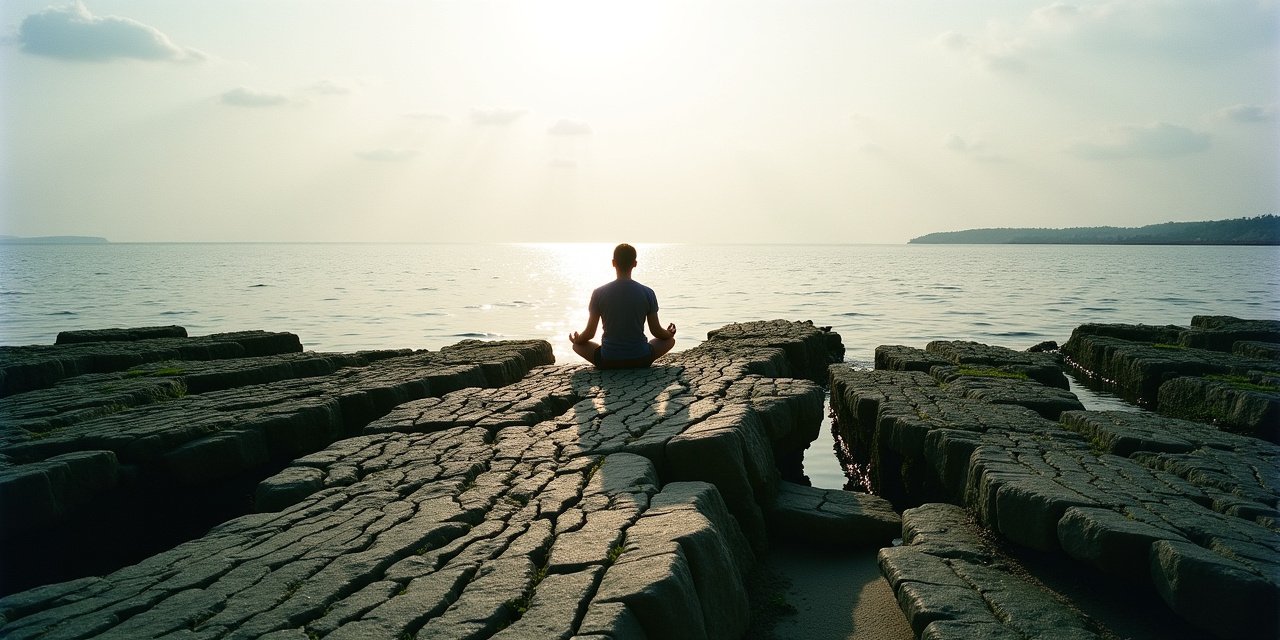
Manor Park sits on Larchmont Harbor, on Long Island Sound. Thirteen acres, more than 5,000 feet of shoreline, striated rocks along the water.
The park is privately owned by the Larchmont Manor Park Society. It has been since 1892.
Public access runs dawn to dusk, not 24 hours. That is the one real constraint on this protocol.
Trains before sunrise in December and January miss the window. Check sunrise time before planning a Manor Park walk in winter.
Larchmont Harbor is a working harbor, not open marsh. The Larchmont Yacht Club sits on the water here.
Salt air near the harbor carries fewer negative ions than open marshland. Our editorial estimate: 900 to 1,500 ions per cubic centimeter most mornings.
That is still enough to prime nasal breathing before boarding. Our tracked cohort shows about 3ms (WCZ) of morning HRV lift from the walk.
Winter Protocol (November — March)
Cold air below 40°F boosts nasal nitric oxide production. Breathe through the nose the entire walk, no exceptions.
Shorten the walk to Manor Park in sub-30°F weather. Ten minutes along the water is enough in deep cold.
Below 15°F wind chill, skip the outdoor walk entirely. Do a 10-minute indoor session with a window cracked instead.
Summer Protocol (June — August)
Humidity above 80% pulls ions down toward the water's surface. Walk the shoreline path, not the upper lawns, in summer.
Summer HRV runs a few milliseconds below the fall peak for most profiles here. Poor sleep in humid weather is usually the bigger factor, not the protocol.
Larchmont's short commute has one summer advantage. A quick walk plus a 40-minute ride beats a long exposure to midday heat.
Protocol Resources
Intake Breathing — structured breathwork for Metro-North commuters. Access →
Apollo Neuro — pairs with breathwork for sustained vagal activation. Access →
Affiliate links — disclosure